Kordano vs Time Doctor: which fits your team better
Time Doctor was built for BPO and call-center floors. Kordano is built for distributed remote teams. The difference matters more than the feature list.

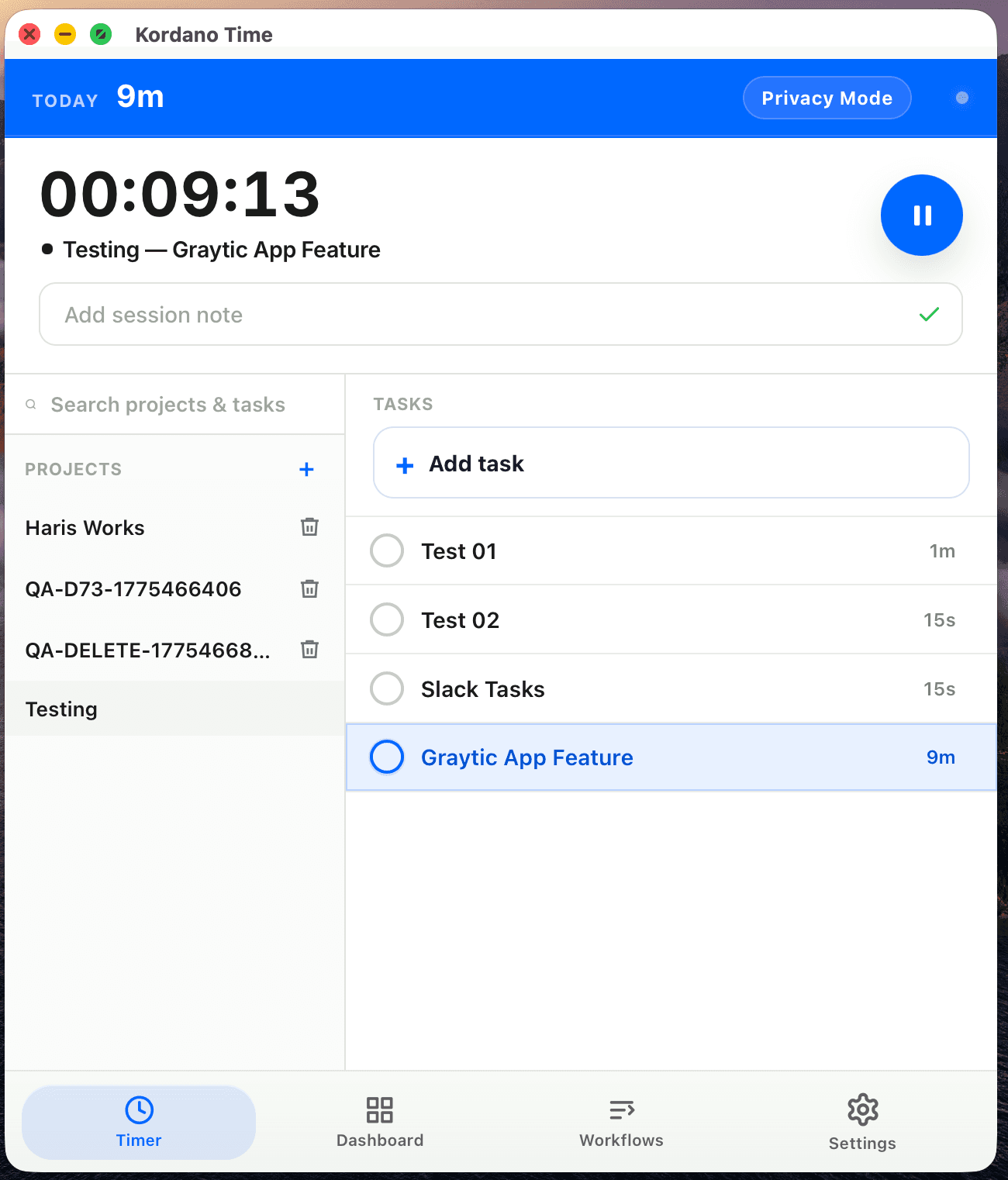
Time Doctor and Kordano look like the same product on a feature comparison page. Time tracking: yes. Screenshots: yes. Productivity reports: yes. Payroll exports: yes. Integrations: both.
The difference is who they were built for. Time Doctor was built for BPOs, call centers, and outsourcing operations where a supervisor watches 20-50 agents and needs continuous visibility. Kordano is built for distributed knowledge teams where 6-50 people work across time zones and need a calmer rhythm.
Where Time Doctor's BPO roots show
Their "Web & App Usage" report ranks sites and apps by time spent, by user, by team. Useful when you're managing a 200-seat call center and need to spot the agent who's spending three hours a day on YouTube. Heavy-handed when you're managing engineers who legitimately spend hours in Figma, Linear, and YouTube tutorials.
Their alerting is built for high-volume operations. "Notify me when an agent is idle for more than 3 minutes" makes sense for support work. It doesn't make sense for product work where the best thinking happens away from the keyboard.
Their pricing scales with the seat count and assumes you have a centralized admin team. The cheaper Basic plan ($7/seat/mo billed monthly) doesn't include screenshots, payroll, video, or most of what people actually need.
Where Kordano fits
You have a 6-50 person team that's mostly knowledge work — engineers, designers, ops, marketing, support. You need time tracking and attendance for payroll and project work, not for shift supervision. You want screenshots available but not as the primary signal.
You want one bundle price (Founding 100: $3/seat for the first 24 months) rather than feature-by-feature add-ons.
You want the option to bring your own storage. Kordano supports AWS, GCP, or Azure on the Scale plan, so the screenshot history can live on your own infrastructure. Time Doctor stores everything in their cloud, full stop.
Where Time Doctor still wins
Multi-language support is more mature. If your team is split across non-English-speaking offices, Time Doctor has more localization invested.
Their BPO-specific tools — agent break management, schedule adherence reports, customer ticket integration — are real and Kordano doesn't try to compete on them. If you're running a contact center, Time Doctor is the right tool.
How to decide
Are you a BPO or call center? Stay on Time Doctor. The product fits the work.
Are you a distributed knowledge team that picked Time Doctor by default and now finds the monitoring intensity awkward? Look at Kordano. We made different trade-offs because we serve a different team.
Move from Time Doctor in a week.
Hand us a CSV export or a login. We map your users, projects, and history. You start where you left off.
Get the next strong Kordano article without checking back.
We send practical comparisons guidance when it is ready, not filler just to hit a schedule.
Keep reading
Kordano vs Hubstaff: an honest comparison for remote teams
Hubstaff has been the default time tracker for remote teams for a decade. Here is where it still wins, where it overshoots, and the kind of team Kordano fits better.
May changelog: bring-your-own-storage, configurable idle, and a calmer review screen
What we shipped in May 2026. The headline: bring-your-own-storage (AWS/GCP/Azure) is live on the Scale plan, idle thresholds are configurable per role, and the daily review screen is half its old visual weight.
Founding 100: how the program works, what's locked in, and why we're capping it
We're picking 100 teams for a $3/seat price locked for two years, free migration, direct founder access, and a permanent 20% discount after. Here is exactly how the program works.